Pulpit Rock's New Trail System Is Open: What Colorado Springs Hikers Need to Know
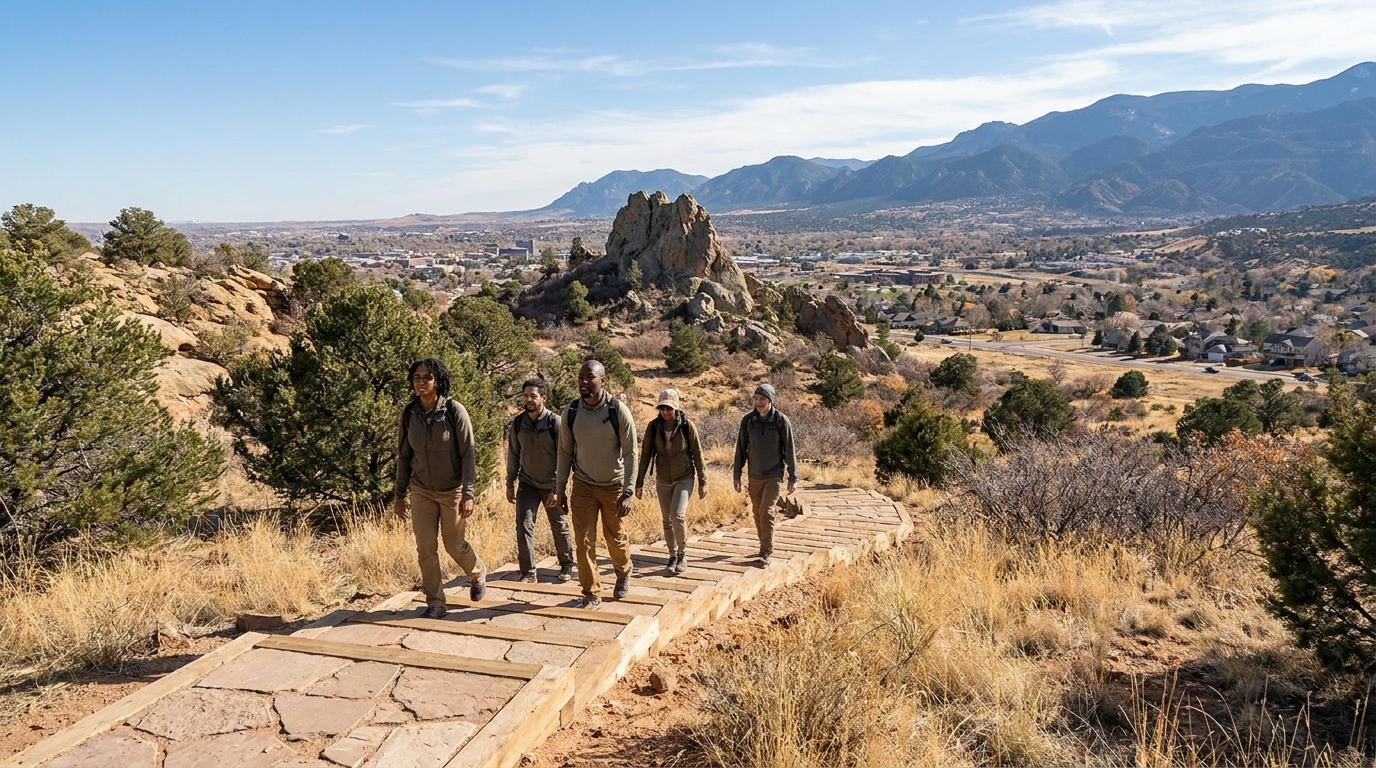
If you've hiked Pulpit Rock before, you know the feeling. You're technically in the middle of the city, but it doesn't feel that way. The views stretch across Colorado Springs in every direction, and for a few minutes at the top, everything slows down.
The problem was always getting there. For years, the trail system around Pulpit Rock was a maze of informal paths that hikers had worn into the landscape on their own. No real signs, no designated parking, no clear route to the summit. The city officially fixed that on November 12, 2026, cutting the ribbon on a fully redesigned trail system at Austin Bluffs Open Space, including a brand-new staircase to the top.
As someone who works in Colorado Springs real estate and genuinely loves this city, I think this is a big deal. Not just for hikers, but for anyone thinking about where they want to live.
Key Takeaways
Over 22 miles of redesigned trails officially opened at Austin Bluffs Open Space on November 12, 2026.
The new Enlightenment Trail is a hiking-only route with a 372-step staircase to the Pulpit Rock summit, built from natural materials.
88 designated parking spaces are now available across two upgraded trailheads on N. Nevada Avenue.
UCCS provided trail easements that helped connect city trails with university trails across nearly 600 acres of open space.
The redesign formally closed and began restoring rogue trails that were damaging the natural landscape.
Trailhead upgrades include lighting, cameras, fencing, kiosks, and trail maps.
Some maintenance and trail restoration is expected to continue through spring.
Neighborhoods like University Park, right next to the open space, offer a rare mix of outdoor access and everyday convenience that buyers keep gravitating toward.
What Opened at Pulpit Rock?
The city had been planning this since June 2020, when Parks, Recreation and Cultural Services formally adopted the Austin Bluffs Open Space Master Management Plan. What took so long? A project like this involves trail design, environmental review, partnerships with UCCS, funding, and construction across nearly 600 acres. These things take time.
What actually opened is worth understanding clearly. The 22-plus miles refers to the redesigned and formalized network, not entirely new construction from the ground up. The city's bigger problem was that Austin Bluffs never had officially designated trails or formal trailheads. Hikers created their own routes over decades, and those informal paths were eroding the land and impacting natural resources.
Here's what the redesign delivered:
Enlightenment Trail: A hiking-only summit route with a 372-step staircase made from natural materials, so it looks like it belongs there rather than being dropped in from a stadium.
Spine Trail improvements: About 2 miles of upgraded trail surface and alignment.
Trailhead upgrades: Both the north and south trailheads got formal parking, lighting, security cameras, fencing, kiosks, and wayfinding maps.
UCCS connections: New linkages between the Spine Trail and Rim Trail, made possible by university-provided easements.
88 designated parking spaces split across both trailheads, which is a meaningful upgrade from what existed before.
Parks director Skyler Rorabaugh, who was actually involved in the master planning process when he worked at UCCS, called seeing it come together "incredibly rewarding." That kind of long-term investment in a project usually shows in the finished product, and by all accounts, this one does.
What Should Hikers Know Before Visiting Pulpit Rock?
Whether this is your first time at Pulpit Rock or your fiftieth, the experience is different now. Here's what to know before you go.
Where Should Hikers Park?
Both trailheads are on N. Nevada Avenue:
North Trailhead: 6411 N. Nevada Avenue
South Trailhead: 5715 N. Nevada Avenue (this is where the ribbon cutting happened and where the staircase begins)
The 88 spaces are split between both locations. The south trailhead is your best bet if the summit is the goal. Pulpit Rock has always drawn a crowd on nice weekends, so arriving early still pays off. Formal lots help, but they're not infinite.
How Difficult Is the New Staircase?
Three hundred and seventy-two steps is real work. This isn't a gentle nature walk. The Enlightenment Trail climbs steadily, and once you're at the top, the summit area involves uneven, rocky terrain. The natural-material construction makes footing feel more secure than exposed metal steps would, but it's still a physical commitment.
If you're bringing kids or someone who doesn't hike often, build in time to rest and make sure everyone has water. The payoff at the top is genuinely worth it. Just go in knowing what you're signing up for.
Which Trails Are Hiking-Only or Multi-Use?
The Enlightenment Trail is hiking-only. The Spine Trail's north alignment is multi-use, meaning hikers, cyclists, and equestrians share the route. Trailhead kiosks will show you current posted restrictions, so take a minute to look before heading out, especially if trail-use etiquette matters to your group.
What Conditions Should Visitors Plan For?
November in Colorado Springs means you can get sunshine, snow, or both in the same afternoon. The summit is exposed, and those steps can get slippery fast. A few things worth having:
Water (confirmed on-site water isn't available, so bring your own)
Traction footwear if there's any snow or ice in the forecast
Layers, because the summit feels colder than the trailhead
Sun protection, even on cold days at elevation
Turning around mid-hike is always the right call if conditions aren't cooperating. The trail isn't going anywhere.
How Does the Redesign Protect Austin Bluffs?
This part doesn't get as much attention as the staircase, but it's just as important. Decades of unofficial trails left their mark on Austin Bluffs in the form of erosion, compacted soil, and disturbed vegetation. A 2025 city grant budgeted restoration of 4,100 linear feet of rogue trail as part of the broader project. Some of that restoration work may still be finishing up through spring.
The new system routes traffic along sustainable paths designed to handle real foot traffic without degrading the landscape. Staying on marked trails isn't just a rules thing here. It's genuinely how the open space stays worth visiting long-term. The natural beauty that makes Pulpit Rock special is exactly what this project was designed to protect.
How Do the Trails Connect With UCCS?
UCCS played a bigger role in this project than most people realize. The university provided access and trail easements that allowed the city to expand the south trailhead and create a connection between the Spine Trail and Rim Trail. That's a meaningful improvement for anyone who lives or works near campus and wants to access the open space from that side.
One thing to know: UCCS public trails operate dawn to dusk, while city open space hours run 5 a.m. to 9 p.m. from November through April and 5 a.m. to 10 p.m. from May through October. If you're planning a longer loop that crosses both systems, it's worth confirming posted hours before you go so you're not caught off guard at the end of your hike.
What Is Life Like Near Pulpit Rock?
Here's what I tell buyers who ask about this part of Colorado Springs: having a trailhead like Pulpit Rock within reach of your neighborhood is not something you take for granted. That's one of the things that makes living in Colorado Springs genuinely special. You get world-class outdoor access without giving up the conveniences that make everyday life easy.
University Park, the neighborhood closest to the trailheads, is a great example of that combination. You've got established homes with real character, mature trees, views of the mountains, and proximity to UCCS, N. Nevada Avenue retail, and major commuter routes. It doesn't feel like a tradeoff. University Heights, University Bluffs, and parts of Rockrimmon also offer solid access, though actual walkability to the trailhead depends on your specific street and how much of a hike you're willing to do before the actual hike.
From a real estate standpoint, proximity to open space and trails is a lifestyle consideration, not a price formula. What it does tend to do is make a neighborhood feel more livable and more distinctly Colorado. Buyers who care about being outdoors consistently value it, and that kind of appeal holds up over time.
The improvements at Pulpit Rock make an already appealing area even better to live near. Better parking, clearer routes, and a staircase that actually takes you to the summit in a sustainable way, it all adds up to an outdoor destination that more people can genuinely use.
If you're curious about what's available near Pulpit Rock or in the neighborhoods surrounding Austin Bluffs, I'd love to help you explore your options. You can browse current listings and get in touch at PenkhusProperties.com.
Frequently Asked Questions
Are Dogs Allowed on the Enlightenment Trail?
Colorado Springs requires dogs to be leashed and waste removed throughout open spaces, but trail-specific restrictions for the Enlightenment Trail aren't confirmed in current public materials, so checking posted trailhead signage before your visit is the safest move.
What Are the Hours for Austin Bluffs Open Space?
City hours run 5 a.m. to 9 p.m. from November through April and 5 a.m. to 10 p.m. from May through October, though posted closures can change that, so it's worth a quick check before you go.
Are Restrooms and Drinking Water Available?
Restroom and water availability at the upgraded trailheads isn't confirmed in current public materials, so plan to bring your own water and use facilities before you arrive.
Is Pulpit Rock Part of Austin Bluffs Open Space?
Yes. Pulpit Rock sits within the Austin Bluffs Open Space network, which covers approximately 600 acres and includes Pulpit Rock Park, University Park Open Space, and several connected parcels managed by the city.
Check out this article next